Multi-Agent Systems Explained: When One AI Agent Isn't Enough
7 October 2026 · 10 min read
Vyom Solution
Founder & Lead Designer
Vyom Solution is a web studio based in India, designing and building custom websites for founders worldwide.
One agent doing everything is like one employee running sales, accounts and design. It works — until the work gets big. Multi-agent systems fix this by giving each agent one job.
This article explains the main patterns, compares single and multi-agent setups, and shows when the extra complexity actually pays off.
▪Single agent vs multi-agent
The choice is a trade-off between simplicity and specialisation.
| Single agent | Multi-agent system | |
|---|---|---|
| Setup effort | Low | Medium to high |
| Cost per task | Lower | Higher (more model calls) |
| Handles long, complex jobs | Struggles | Strong |
| Quality control | Self-check only | Separate reviewer agent |
| Debugging | Simple | Needs good logs |
▪Three common patterns
Most real systems use one of three shapes. Frameworks like Microsoft AutoGen and LangGraph make each of these easier to build.
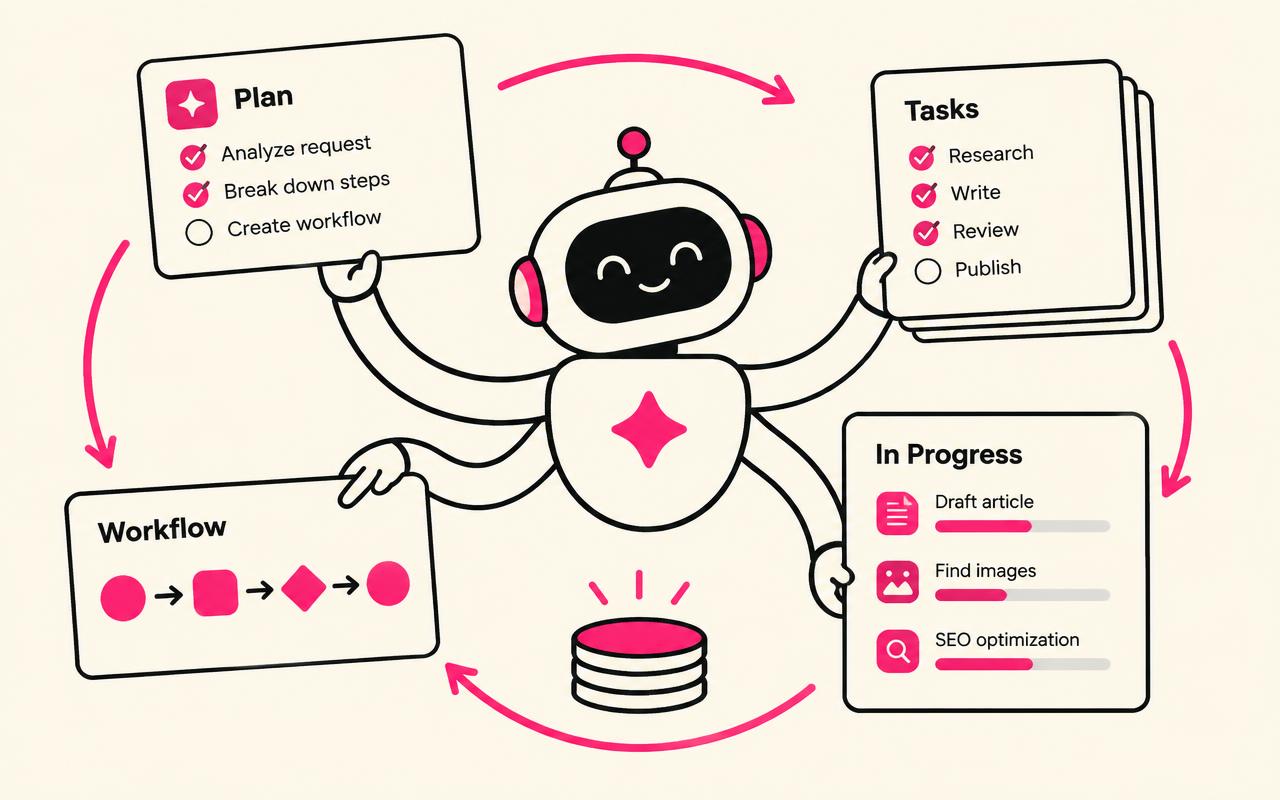
- ✓Orchestrator–workers: one planner hands sub-tasks to specialists and merges the results
- ✓Pipeline: each agent passes its output to the next, like an assembly line
- ✓Debate / reviewer: one agent drafts, another critiques, they iterate until it passes
▪A real example: writing a researched article
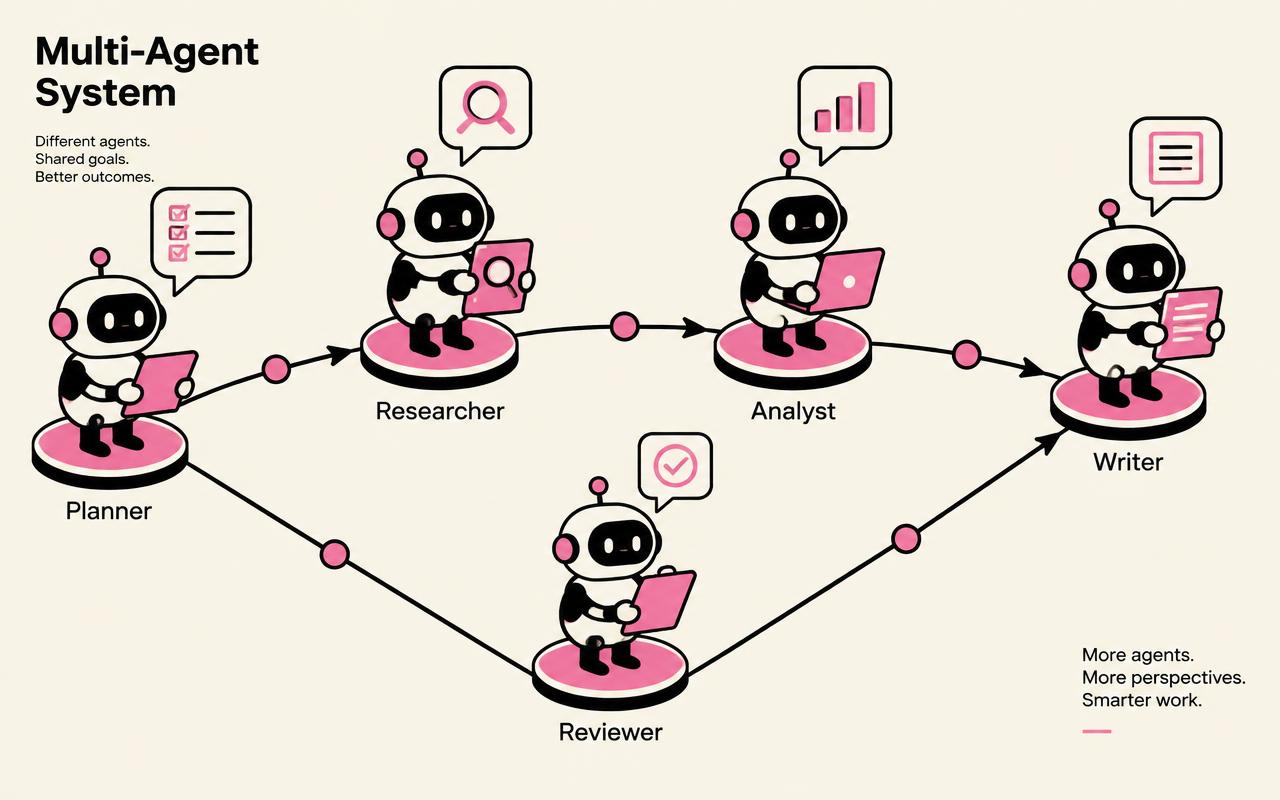
A planner splits the topic into questions. A researcher gathers sources. An analyst pulls out the numbers. A writer drafts. A reviewer checks facts and tone and sends it back if needed. Each agent has a short, focused instruction — which is exactly why quality goes up.
▪When it's worth it
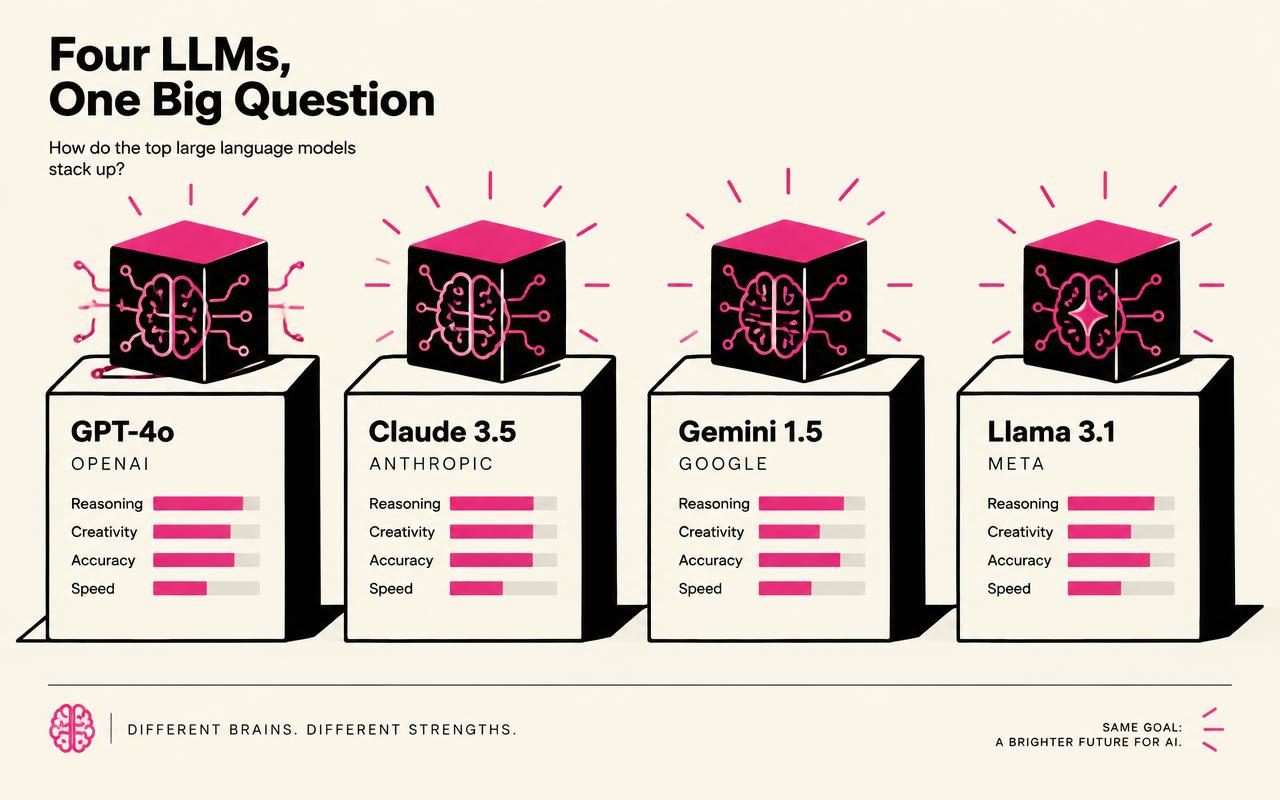
Start with one agent. Move to many only when you can name the bottleneck: the job is too long for one context, quality needs an independent check, or parts can run in parallel. If you're still choosing a model for each role, read how to choose the right AI model.
▪Action Steps
- 1
Prove it with one agent first: don't split what already works.
- 2
Name each role in one line: planner, researcher, writer, reviewer.
- 3
Define the hand-off format: agents should pass structured notes, not essays.
- 4
Log every step: you'll need it the first time something goes wrong.
- 5
Cap the loops: set a maximum number of review rounds to control cost.
▪Frequently Asked Questions
What is a multi-agent system in AI?+
A setup where several AI agents, each with a specific role, cooperate to complete a task that would be too large or complex for one agent.
Are multi-agent systems more expensive?+
Usually yes, because each agent makes its own model calls. The trade is better quality and the ability to handle bigger jobs.
Can different agents use different models?+
Yes, and they often should — a cheaper fast model for routine steps and a stronger model for planning or review.